Field-Aligned Isogeometric Methods for Tokamak Simulations

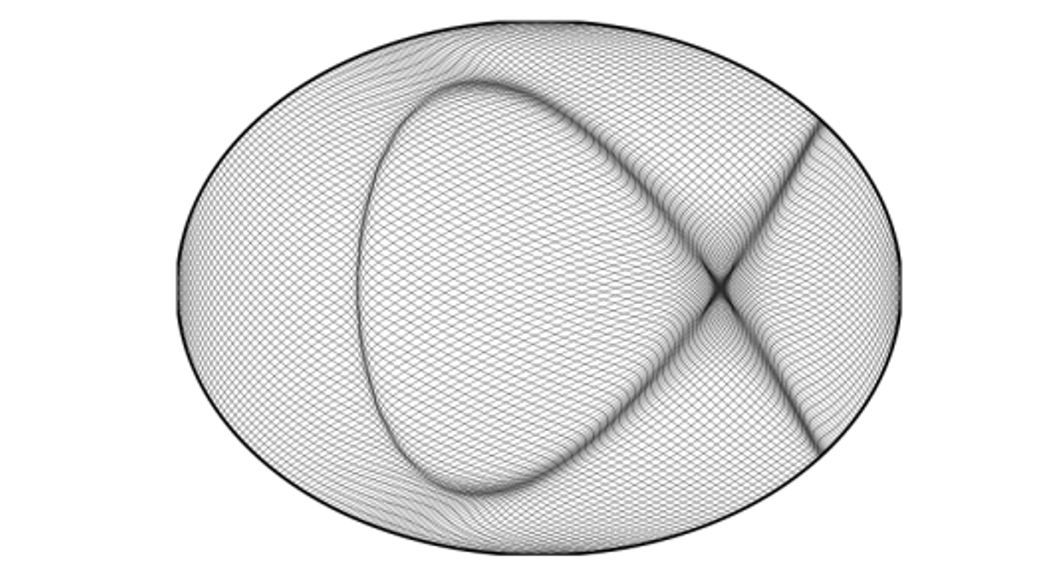
Example of an adaptive mesh generated from an isocontour
Example of an adaptive mesh generated from an isocontour Example of an adaptive mesh generated from an isocontour
About the project

The main objective is to enhance the NICE (© UniCA) finite element (FE) simulation code to meet the specific requirements of numerical studies for ITER, the tokamak currently under construction in Cadarache, by leveraging the advantages of isogeometric analysis, including the use of high-order finite elements and the exact representation of curved geometries.

The originality of this approach lies, first, in its ability to generate meshes aligned with the curved magnetic field lines. Such meshes significantly reduce numerical diffusion, a critical issue that remains insufficiently addressed in many existing simulation codes. Second, the approach will enable these meshes to be dynamically adapted throughout the simulation.

The objective of this project is to extend the capabilities of NICE to perform computations on moving, field-aligned meshes, thereby providing the most suitable framework for future ITER simulations.

Principal investigator

Francesca Rapetti-Gabellini, LJAD (Université Côte d'Azur) & Inria EPI Castor

Project partners
  • Angelos Mantzaflaris, Inria EPI Aromath

  • Blaise Faugeras, CNRS-LJAD (Université Côte d'Azur) & Inria EPI Castor

Duration
01/09/2026 - 31/08/2027
Total amount
65k€
Page web de l'Académie RISE